
Reality, Resilience, and Radical Hope
A 5-minute read written by Alia Mahmoud
As 2025 comes to a close, it feels important to take stock of the year and what it meant for “nonprofit” fundraising; at this point, we hope you know we prefer the term “for-impact” (thank you to our friends at For Impact for enlightening us!). This year was one of the toughest many of us have experienced. At Radical Partners, we felt this acutely. In May, we had to make the difficult decision to lay off four valued team members in response to funding cuts and shrinking budgets. This experience was far from unique. Across the social impact sector, particularly among smaller grassroots organizations, the pressure was immense.
Federal funding cuts combined with an overall drop in philanthropic giving created a challenging environment, to say the least. The Center for Effective Philanthropy’s recent report shows that nonprofits with budgets under $1 million were hit the hardest. Many had to reduce staff and scale back programs just to survive. For-impact organizations have been called on to be resilient, to get lean, and to collaborate more than ever. While some may blame them for being "over-reliant" on single funding sources, the reality is far more complex. The report highlights how diversification is difficult to achieve quickly, especially when so many funders are pulling back at the same time. Meanwhile, divisive political policies at the federal and state level continue to disenfranchise the very communities for-impact organizations exist to support. This made fundraising not only harder but even more urgent.
Despite these hardships, there are positive signs to hold onto. According to the 2025 Bank of America Study of Philanthropy, many donors remain committed to giving. In fact, 72 percent of donors plan to maintain or increase their giving in 2026. Younger generations and high-net-worth individuals are particularly engaged in social causes. This shows that while the terrain is tough, there is still a strong appetite for philanthropy and impact. For-impact organizations can tap into this momentum by innovating how they engage donors and tell their stories.
In crisis moments like this, for-impact organizations must indeed get creative, find ways to share resources, and make tough decisions to keep serving their communities. However, resilience, creativity and collaboration cannot be the onus of organizations alone. Funders must also rise to the occasion. Philanthropic capital needs to flow beyond the mandated 5 percent endowment minimum. Flexible, general operating support and multi-year commitments provide the stability nonprofits desperately need. Following the six practices of Trust-Based Grantmaking offers funders a clear path to build stronger, more equitable partnerships.
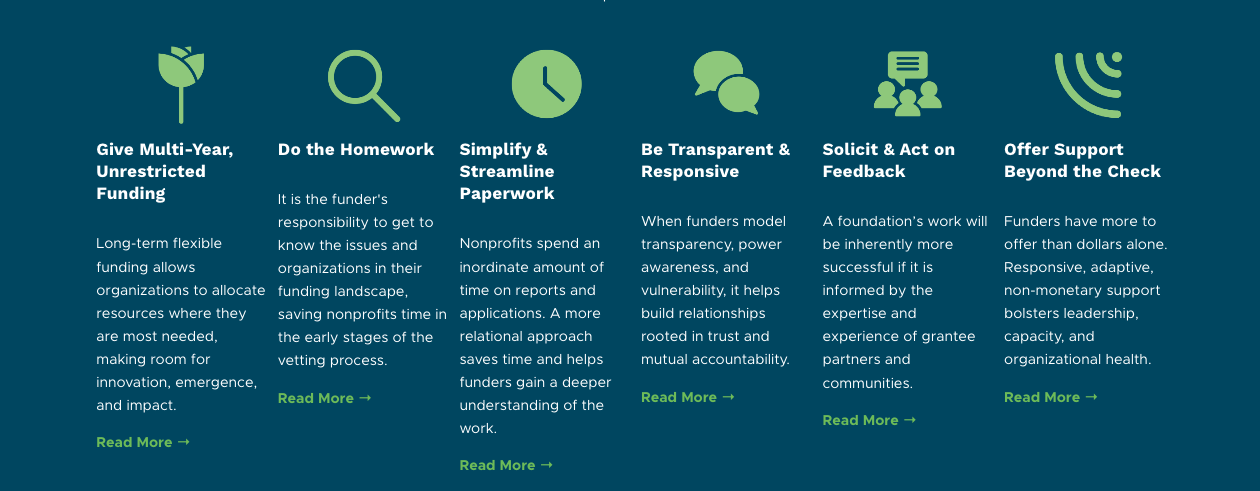
As of this writing, there are only 4 signatories of the Trust-Based Philanthropy Pledge from Florida, and none of them in Miami Dade County, which leaves a critical gap in our local ecosystem. Three cheers to the Joseph H. & Florence A. Roblee Foundation, that invests in Miami despite not being based here, for stepping up as a signatory. I also want to shout out Florida signatory, Allegany Franciscan Ministries, for putting these practices into action and launching a thoughtful and bold Sabbatical Program for their grantees. Their leadership sets an example we need more local funders to follow.
In my role as Senior Director of Growth, I speak regularly with leaders who are struggling to hold onto staff and keep programs running as budgets shrink. At the same time, I witnessed funders pausing to regroup and rethink strategy in response to new executive orders rolling back diversity, equity, and inclusion efforts. This disconnect has serious consequences for the sector.
I also experienced firsthand how capacity strengthening and technical assistance programs are often the first to be cut in tough times. Yet these supports are more essential than ever. They help nonprofits navigate change, make difficult decisions, and fill staffing gaps with expert help. This experience underscores the urgent need for funders to invest louder and deeper in their grantees and in those who can step up to fill the capacity gaps during crises, not retreat.
This reality makes it clear that financial resilience for nonprofits depends on patient capital—funding that understands the complexities of mission-driven work and supports organizations in the long term, through both stability and change.
Recommendations for For-Impact Leaders
Embrace collaboration and resource sharing with peer organizations.
Continue efforts to diversify revenue streams while also advocating for funders to share responsibility.
Prioritize mission-critical services and explore creative financial strategies.
Leverage growing individual donor enthusiasm by innovating engagement and storytelling.
Recommendations for Funders
Increase giving beyond the 5 percent minimum endowment payout.
Provide general operating and multi-year support to offer for-impact organizations stability and flexibility.
Adopt and practice trust-based grantmaking principles to build equitable partnerships.
Invest in capacity strengthening and technical assistance as critical, not optional.
The challenges in 2025, which feel like 2020 all over again, remind us that the social impact ecosystem constantly faces difficult and complex realities. But the year also showed the power of resilience, partnership, and a growing philanthropic imperative that we can harness to build more just, effective, and thriving communities.
At Radical Partners, we remain deeply committed to growth, collaboration, and advocating for a social impact ecosystem that truly meets the moment. If this resonates with you, please consider donating to Radical Partners or reach out to me directly at alia@radicalpartners.net to dream and build something together.
References:
Center for Effective Philanthropy. (2025-10). Mounting Pressure: How Nonprofits Are Navigating Funding Cuts. [https://cep.org/wp-content/uploads/2025/10/Mounting_Pressure_FINAL.pdf]
Bank of America. (2025). Study of Philanthropy. [https://www.privatebank.bankofamerica.com/articles/bank-of-america-study-of-philanthropy.html]
Trust-Based Philanthropy Project. (n.d.). 6 Practices of Trust-Based Grantmaking. [http://trustbasedphilanthropy.org/]